Small Rental Bathroom Organization With No Drilling (Checklist)
A small rental bathroom has to work hard: one sink, one mirror, one shower or tub, and storage that often amounts to a single cabinet and a narrow shelf. Add a no-drilling lease, and the usual storage advice falls apart. This guide covers small rental bathroom organization with no drilling, built around zones, adhesive hooks, an over-door rack, and a strict limit on what stays on the counter. The result is a bathroom where daily items are easy to reach, extras have a defined home, and a five-minute nightly wipe-down keeps the room presentable all week.
In short
- Sort everything into three zones: daily, weekly, and storage.
- Adhesive hooks and an over-door rack add storage without holes.
- Keep the counter nearly clear: only what you use daily stays out.
- Give each person one shelf so sharing stays fair and tidy.
- End each day with a five-minute wipe-down and a weekly purge of empties.
Start by sorting into three zones
Before you buy anything, take everything out of the bathroom cabinets, the shower shelf, and the counter. Sort it all into three piles on a towel on the floor. The daily pile holds what you use every morning or evening: toothbrush, toothpaste, face wash, deodorant, daily medication you keep in the bathroom, and the hair tools you use daily. The weekly pile holds what you use a few times a week: masks, treatments, nail tools, and extra hair products. The storage pile holds backups, first aid supplies, extra toilet paper, and cleaning products.
This sort usually reveals the real problem: half-empty bottles, expired products, and duplicates bought because the first bottle was hidden. Discard empties and anything past its label date, keep one open bottle of each daily product, and move backups to storage.
Use the walls and the door, not the floor
In a small bathroom, wall and door space is the only space that is not already claimed. Adhesive hooks for towels and robes free the one towel bar for the towel in use and give robes and spare towels a home that does not need a drill. Place hooks on smooth tile or painted wall following the label instructions, and allow the full curing time before hanging anything heavy. Check weight limits, especially for thick robes and wet towels, which weigh more than they look. If a hook loosens in the steam, replace its adhesive rather than adding more weight to a failing hook.
An over-door rack for toiletries turns the back of the door into a full shelf unit. Hang it over the bathroom door if the door closes freely, or over a closet door nearby if the bathroom door is too tight. Use it for the weekly pile: extra products, styling tools, and items you need a few times a week but not every day. Keep the rack balanced and do not overload the top rows, which can strain the door hinges over time. Together, hooks and an over-door rack can double the storage in a small bathroom without a single hole, and both come down cleanly when you move.
Fix the shower and the sink
Shower storage fails when bottles sit on the tub edge or the shower floor, where they slide, collect residue, and make cleaning harder. A suction or tension-rod shower caddy lifts bottles off the floor and keeps them where you can reach them. A tension-rod caddy fits a corner pole from floor to ceiling and works well in a tub shower. A suction caddy sticks to smooth tile and suits a walk-in shower. Whichever type you choose, limit it to the products you use in the shower each week. If the caddy holds more than six or seven bottles, some of them belong in the storage zone.
The sink counter needs the strictest rule in the room: only daily items stay out. A toothbrush holder, soap, and one or two daily products are enough. Everything else goes in a cabinet, on a shelf, or in the over-door rack. A clear counter makes the five-minute nightly wipe-down possible, because you can wipe the whole surface without moving a dozen bottles. If you share the bathroom, give each person one shelf, whether that is a cabinet shelf, a tray, or a section of the over-door rack. One shelf per person ends the quiet contest for counter space and makes it obvious when someone's items have spread beyond their share.
Organize under the sink
Under-sink space is awkward: pipes run through it, it can be damp, and one large bin rarely fits. Short bins that fit around the plumbing work better. Set up three under-sink bins: one for cleaning supplies, one for extras such as spare toilet paper and backup products, and one for first aid supplies. Label the front of each bin or use different colors so anyone in the home can find what they need. Keep cleaning products upright, follow their labels, and never mix cleaning products. If the cabinet floor shows signs of a leak, tell your landlord promptly and keep items off the wet spot until it is fixed.
Decanting can help, but only in small doses. Decant only what you use daily, such as hand soap or a daily lotion, into a pump bottle or a small container that fits the counter. Decanting everything creates extra containers to wash and labels to maintain, and it hides how much product you actually have left. Keep backups in their original containers in the storage zone, where labels stay readable and dates stay visible. The goal under the sink is simple: three bins, each with one job, and nothing loose rolling around behind the pipes.
Towels, purges, and the nightly habit
Towels take more space than any other bathroom item. Follow the towel rule: one in use and one spare per person, plus hand towels and washcloths. Store spares folded on one shelf and guest towels elsewhere, not in the bathroom.
A weekly purge stops slow buildup. Once a week, during your regular bathroom cleaning, pull out empties and products you no longer use. Empty bottles take the same space as full ones, and they make shelves look crowded even when you own very little. The purge takes two minutes if you do it weekly and twenty minutes if you do it every few months. Pair it with the five-minute nightly wipe-down: clear the counter, wipe the sink and faucet, hang towels properly, and return any item that drifted out of its zone. A bathroom that gets five minutes a night never reaches the point where cleaning it feels like a project.
Your small rental bathroom checklist
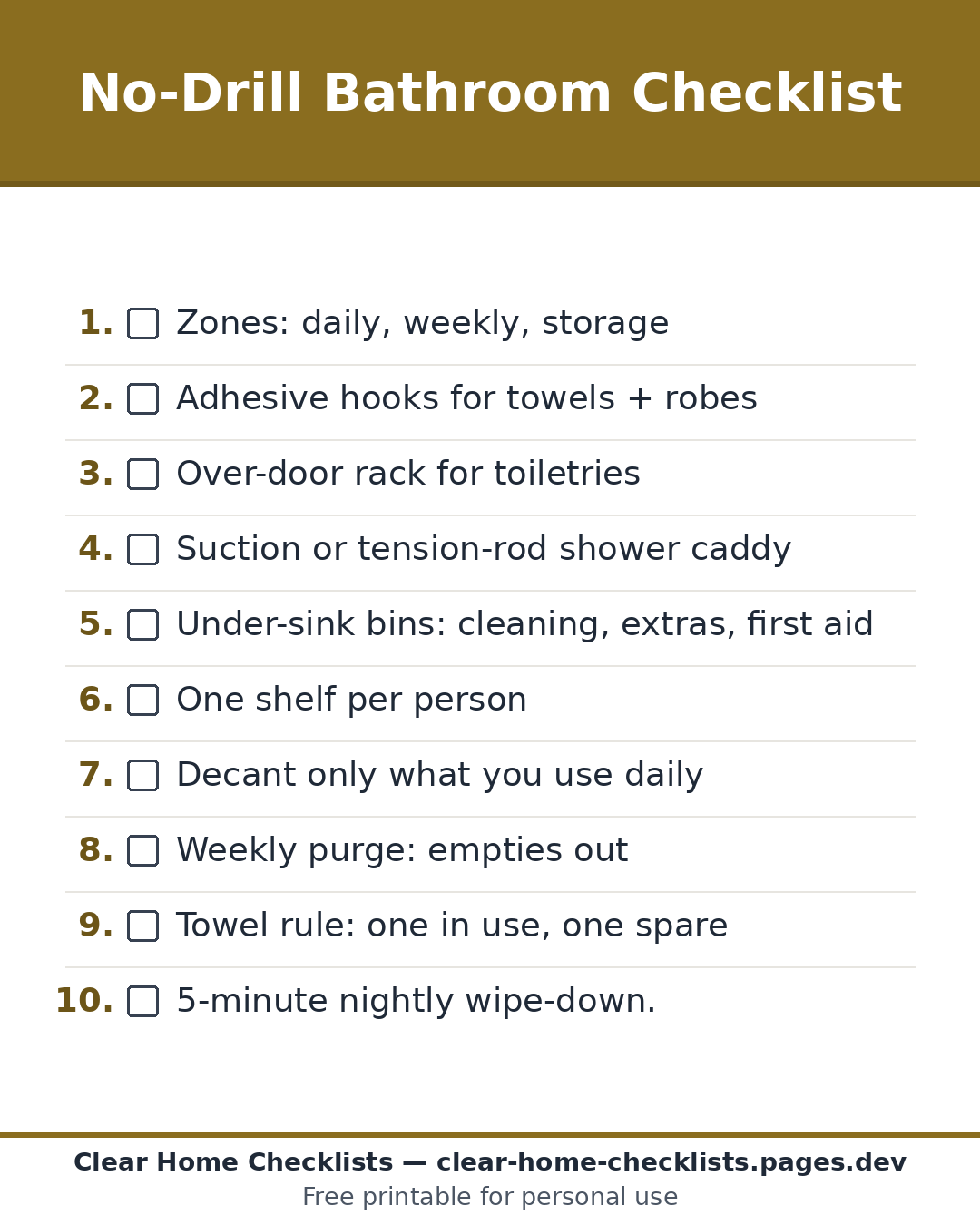
Work through this checklist in order, starting with the zone sort and ending with the nightly habit. The printable version below has the same items, so you can keep it inside a cabinet door as a reminder while the system becomes routine.
- Zones: daily, weekly, storage
- Adhesive hooks for towels + robes
- Over-door rack for toiletries
- Suction or tension-rod shower caddy
- Under-sink bins: cleaning, extras, first aid
- One shelf per person
- Decant only what you use daily
- Weekly purge: empties out
- Towel rule: one in use, one spare
- 5-minute nightly wipe-down
When space is still tight
If the bathroom still feels full, move one category out: backup toilet paper to a hall closet, extra towels to a linen closet, rarely used tools to a bedroom drawer. A small bathroom should hold daily and weekly items plus a small storage zone, not the backup stock for the whole apartment.
Frequently asked questions
How do I add storage without drilling?
Use adhesive hooks, an over-door rack, and a suction or tension-rod shower caddy, all removable when you move.
What should stay on the bathroom counter?
Only daily items: a toothbrush holder, soap, and one or two daily products. Everything else belongs in a cabinet, on a shelf, or in the rack.
How many towels do I need?
One in use and one spare per person, plus hand towels and washcloths, is enough for most small bathrooms.