Small Apartment Entryway Organization Ideas (No Drilling) + Drop-Zone Checklist
In a small apartment, the entryway is often a strip of floor by the door, not a room at all. Yet it has to hold coats, shoes, keys, bags, mail, and umbrellas for everyone who lives there, and it sets the tone for the whole home the moment you walk in. These small apartment entryway organization ideas use no drilling, so renters can build a real drop zone with adhesive hooks, over-door hooks, trays, and one small bowl. The goal is simple: everything you need when you leave is waiting by the door, and nothing extra stays on the floor overnight.
In short
- Give every person one hook, and keep the floor clear overnight.
- A shoe tray, a key bowl, and a mail spot handle most entryway clutter.
- Hang bag hooks at shoulder height so bags stay off chairs and floors.
- Sort mail daily so paper never becomes a pile by the door.
- A weekly five-minute sweep keeps the drop zone working all year.
What a drop zone really needs to do
A drop zone has two jobs. When you come home, it should catch the things in your hands in under thirty seconds: coat off, shoes off, keys down, bag hung, mail sorted. When you leave, it should hand those things back just as fast, without a search through the apartment. If your entryway fails either test, it is not a storage problem. It is a placement problem. The right spots are missing, too far from the door, or already full of things that belong somewhere else.
Watch your own routine for two days. Notice where your keys land, where your bag ends up, and which shoes you reach for. In most small apartments the answer is a narrow wall, the back of the door, and a small patch of floor. That is enough: one defined home for each category, placed where your hands already go.
One hook per person, plus a bag hook
Hooks carry the whole system, and in a rental they must be removable. Use one hook per person for the coat or jacket worn most often, choosing adhesive hooks on a smooth wall or over-door hooks on a solid door. Do not assign three hooks to one person and none to another. One hook forces a choice: the coat you wear today hangs here, and the rest stay in the closet. If two people share the apartment, two hooks side by side keep coats from piling onto one hook and sliding to the floor.
Bags need their own hook at shoulder height. Too low and the bag drags or blocks the walkway; too high and you will ignore it. Shoulder height lets you hang a bag with one motion. If wall space is tight, use the back of the door for bags and the wall for coats. Test the setup for a week: an empty hook is in the wrong spot, and an overflowing hook holds something that belongs elsewhere.
Shoes, keys, and the small things
Shoes spread faster than any other entryway item. A shoe tray by the door draws a clear line: shoes live on the tray, and the tray holds only the pairs worn this week. When the tray is full, a pair goes back to the closet before a new pair joins it. Choose a tray with a raised edge so dirt and wet weather stay contained, and wipe it out during your weekly sweep. If you share the apartment, agree on how many pairs each person keeps on the tray. Two pairs each is a workable limit in most small entries, with the rest stored in closets or under beds.
Keys need a spot you can find without looking: a small bowl on a narrow shelf or tray, placed where your hand lands when you step inside. The same spot can hold sunglasses and a wallet, but nothing else. Empty it during the weekly sweep so it never becomes a junk bowl.
Mail needs a landing spot with a daily habit attached: one small tray, basket, or wall pocket by the door. Sort it daily by recycling junk right away and filing or acting on the rest. Sorting takes two minutes daily and twenty minutes weekly, so daily wins.
Umbrellas, seasons, and the floor rule
Wet-weather gear needs a home that can handle drips. An umbrella stand or tall bin beside the door keeps umbrellas upright and off the floor, and it catches water that would otherwise spread across the entry. In a very small entry, a tall bin tucked beside a shoe tray works just as well as a stand. Keep one umbrella per person in the entry and store spares elsewhere. The same thinking applies to gloves, hats, and scarves in cold months: one small basket for the items in daily use, with the rest stored in a closet.
Seasons change what the entryway must hold, so plan a seasonal swap. When warm weather arrives, move heavy coats, boots, and cold-weather gear to closet storage and free the hooks and tray for lighter items. When cold weather returns, swap them back. The swap takes about fifteen minutes and stops the entryway from holding two seasons of gear at once, which is how small entries end up buried. Do the swap when you notice yourself reaching past off-season items every day. That friction is the signal.
The floor rule ties it all together: nothing on the floor overnight except the shoe tray and the umbrella stand or bin. Bags hang, coats hang, mail sits in its tray, and keys sit in the bowl. A clear floor makes a small entry feel larger, makes sweeping quick, and makes it obvious when something new has crept in. If an item has no hook, tray, or bowl, it does not belong in the entryway. Give it a home in another room instead of letting it claim floor space by default.
The weekly five-minute sweep
Even a good drop zone drifts. Shoes pair up wrong, coats pile onto one hook, mail strays, and a bag of items meant for another room sits by the door for days. A weekly five-minute sweep resets the system before drift becomes clutter. Pair shoes, hang coats properly, return stray items, wipe the tray, and empty the key bowl of anything that is not keys, a wallet, or sunglasses. Set the sweep for the same day each week, perhaps when you take out the trash or start laundry, so it rides on a habit you already have.
Check your hooks during the sweep. Adhesive hooks can loosen near a busy door or in humidity, so replace the adhesive on any loose hook following the label instructions. Check that over-door hooks still let the door close fully without scratching the frame.
Your small entryway drop-zone checklist
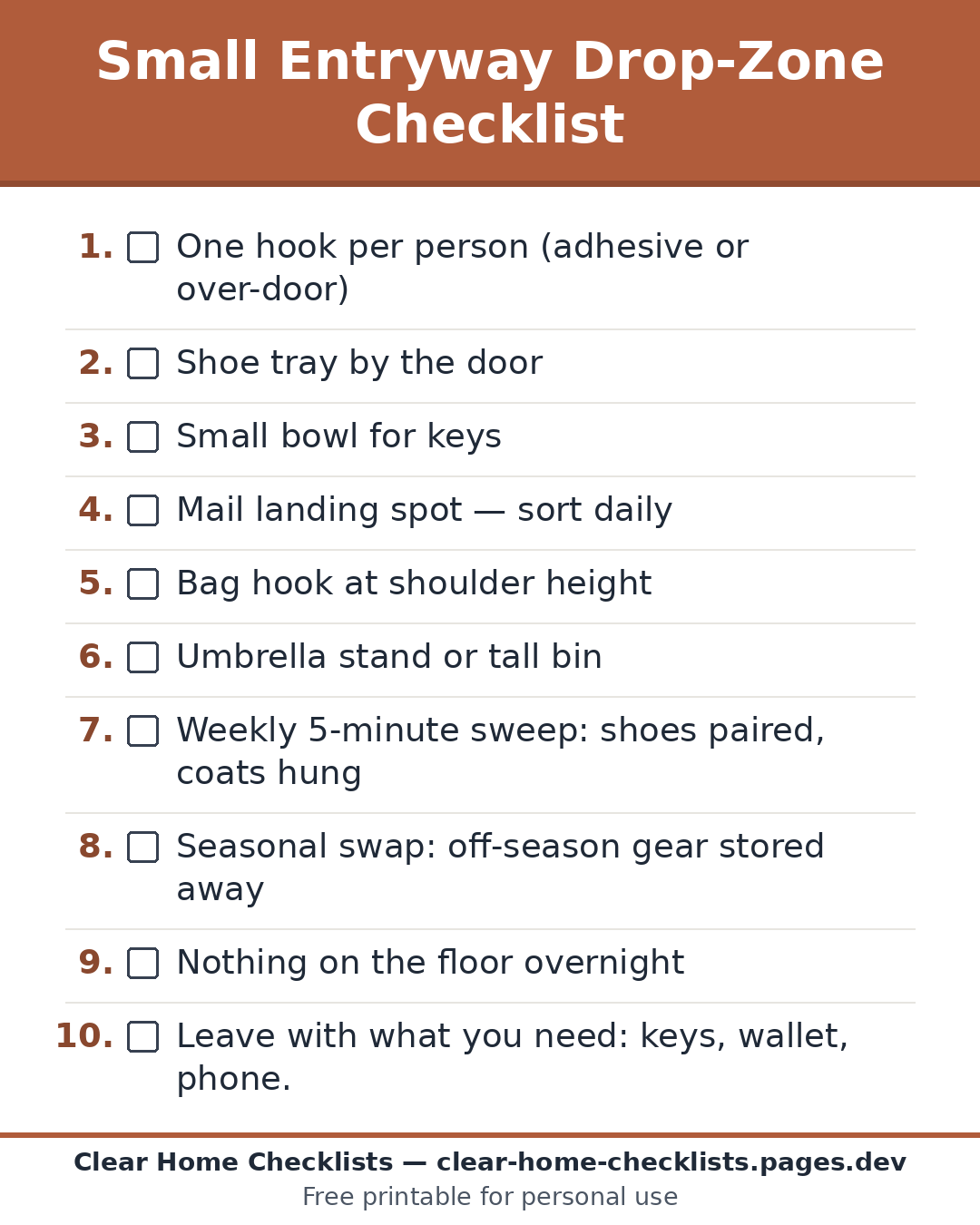
Set up the checklist in order, starting with hooks and ending with the leaving routine. If your entry is only a wall and a door, you can still complete every item. The printable version below has the same items for quick reference.
- One hook per person (adhesive or over-door)
- Shoe tray by the door
- Small bowl for keys
- Mail landing spot — sort daily
- Bag hook at shoulder height
- Umbrella stand or tall bin
- Weekly 5-minute sweep: shoes paired, coats hung
- Seasonal swap: off-season gear stored away
- Nothing on the floor overnight
- Leave with what you need: keys, wallet, phone
Make leaving easy
The final test is the morning exit: keys, wallet, and phone visible in one glance, bag on its hook, shoes on the tray. If any part takes a search, adjust that one spot. A small entryway needs fewer items, clearer homes, and a five-minute weekly habit.
Frequently asked questions
What if my entryway is just a door and a wall?
That is enough. One hook per person, a shoe tray, a key bowl, and a mail spot fit on a wall and the back of a door.
Will adhesive hooks damage rental walls?
Follow the label instructions for weight limits and removal. Check hooks weekly and replace adhesive on any hook that loosens.
How do I stop shoes from taking over?
Use a shoe tray as the limit. When it is full, a pair goes back to the closet before a new pair joins it.