Small Laundry Closet Organization Ideas for Stacked Machines (Checklist)
A laundry closet with stacked machines gives you very little to work with: two machines, a narrow gap on each side, a shelf or two above, and a door that must close. Yet it has to hold detergent, stain supplies, hampers, a drying spot, and a place to fold. These small laundry closet organization ideas are built for stacked machines in a rental or small apartment, where drilling is limited and every inch must earn its place. The method is vertical: divide the closet into zones from floor to ceiling, keep supplies at arm's reach, and keep the floor clear so the machines stay easy to use and easy to maintain.
In short
- Think vertically: wash, dry, fold, and store zones stacked from floor to ceiling.
- A shelf above the machines becomes the fold station.
- Keep detergent in a pump bottle and supplies at arm's reach.
- Give each person a hamper so sorting starts before wash day.
- Wipe machine seals and the filter weekly to keep the closet fresh.
Map the closet before you move anything
Most stacked closets offer five surfaces: the floor in front, narrow gaps beside the machines, the shelf above, the inside of the door, and wall space beside the frame. The shelf suits folding and supplies, the door suits a lint bin, and the floor suits only hampers that slide out easily.
Before you add storage, check access. You need to reach the water shut-off valves, the dryer vent or filter, and the machine doors without moving a tower of supplies. If a shelf, cart, or rack blocks any of those, it is in the wrong place. Leave clearance around the machines so they can vibrate without banging into storage, and never stack heavy items on top of a stacked unit unless the machine instructions allow it. A laundry closet that is hard to open, hard to load, or hard to reach into will not stay organized, because every load will require moving things out of the way first.
Set up vertical zones
Vertical zones divide the closet by task rather than by shelf. The wash zone sits at machine height: detergent, stain supplies, and anything you grab while loading a machine. The dry zone is the drying rack and the space where damp items hang. The fold zone is the shelf above the machines, kept clear enough to fold a load. The store zone is the highest shelf and any bins for backup supplies. When each zone has a clear job, you stop piling everything onto the one shelf above the machines and start using the full height of the closet.
Clear the shelf above the machines and keep a flat surface for folding, plus a small basket for items needing attention. If the shelf is too narrow, use a door-hung folding surface nearby instead. Fold at the machine and put clothes away the same day.
Supplies at arm's reach, floor clear
Detergent is the supply you reach for every load, so it deserves the easiest spot. Keep detergent in a pump bottle on the shelf at arm's reach, refilled from a larger container stored higher up or in another closet. A pump bottle pours with one hand, does not drip down the side of a heavy jug, and takes less shelf space than a large container. Keep stain supplies and any fabric care products beside it in one small bin, so the whole wash zone fits in one arm's reach. Follow product labels for storage and use, and keep all laundry products out of reach of children.
Nothing on the floor keeps the closet usable. Supplies live on shelves, in bins, or on the door, and hampers must slide out easily. Use a slim cart only if both machine doors still open fully; a cart that must be pulled out to open a door will stay pulled out.
Drying, lint, and lost socks
Drying space is the hardest problem in a laundry closet, because wet clothes need air and there is no spare room. An adhesive wall-mounted drying rack on the wall beside the closet, or on the inside of a sturdy closet door if it fits, gives delicate items a place to dry without a freestanding rack taking over the apartment. Hang the rack where air can circulate and where drips will not fall onto clean clothes or the machines. Dry only a few items at a time on a wall rack, and respect the weight limit on the label. Heavy wet sweaters belong flat on a towel on a table or bed, not hanging from adhesive mounts.
Lint and lost socks need small, defined homes. A lint bin on the door catches dryer lint at the moment you clean the filter, instead of letting it pile on the machine or the floor. Empty it into the trash after each drying session. A lost-sock jar on the shelf above the machines holds single socks until their partners turn up in a later load. Check the jar once a month and pair what you can. Single socks left in a drawer or on top of the dryer vanish. Single socks in a jar stay visible, and most of them find their partners within a few washes.
Hampers and the weekly wipe
Sorting starts with hampers, not with wash day. Use one hamper per person in a shared home, so each person's laundry stays separate and wash loads are easy to build. In a single-person home, two hampers or a divided hamper can separate lights and darks, or everyday clothes from towels and bedding. Keep hampers in bedrooms or bathrooms rather than inside the laundry closet if the closet is too narrow, and carry one hamper to the machines at a time. The goal is a hamper system that makes loading a machine a single trip, not a sorting session on the closet floor.
A weekly wipe keeps the machines and the closet in good shape. Once a week, wipe the machine seals with a damp cloth, clean the dryer filter, and wipe the shelf and the tops of the machines. Leave the washer door slightly open after use if your machine instructions allow it, so the drum can air out. Check the floor in front of the machines for leaks or dampness, and tell your landlord promptly if you find any. A five-minute weekly wipe prevents the musty smell that builds in closed laundry closets and helps you spot small problems before they become repairs.
Your stacked laundry closet checklist
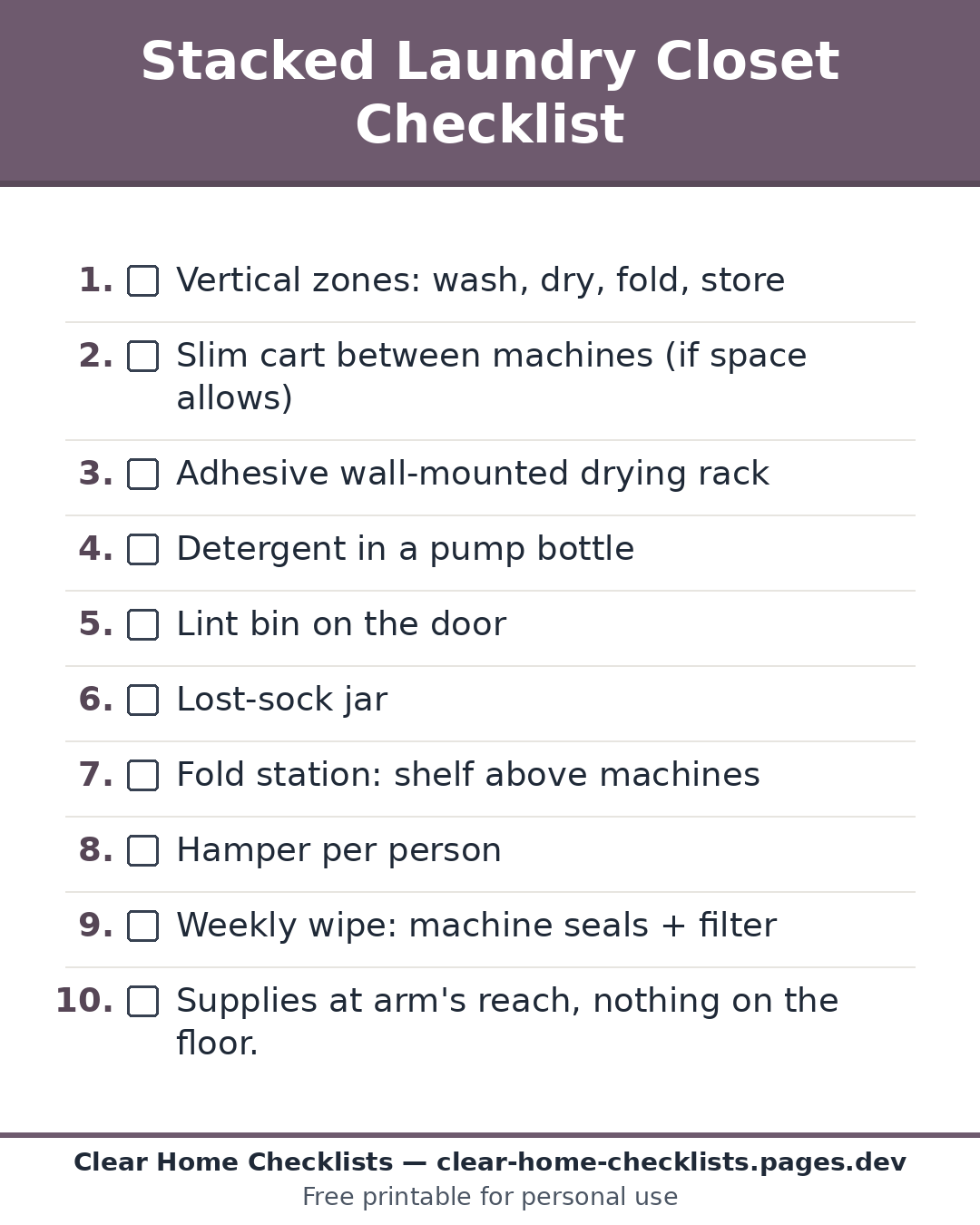
Work through this checklist in order, starting with the zones and ending with the weekly habit. The printable version below has the same items for reference inside the closet door.
- Vertical zones: wash, dry, fold, store
- Slim cart between machines (if space allows)
- Adhesive wall-mounted drying rack
- Detergent in a pump bottle
- Lint bin on the door
- Lost-sock jar
- Fold station: shelf above machines
- Hamper per person
- Weekly wipe: machine seals + filter
- Supplies at arm's reach, nothing on the floor
Make laundry day shorter
Each load should follow one short path: carry a hamper to the machines, wash, dry or hang, fold at the shelf, and put clothes away the same day. If any step requires moving three other things first, adjust that zone. Keep daily supplies at arm's reach and let the vertical zones do the work.
Frequently asked questions
Where do I fold in a laundry closet?
On the cleared shelf above the machines, or on a door-hung folding surface if the shelf is too narrow.
Should I use a slim cart between stacked machines?
Only if space truly allows and both machine doors still open fully. Otherwise, use shelves, bins, and the door.
How often should I wipe the machines?
Weekly: wipe the seals, clean the dryer filter, and wipe the shelf and machine tops.