A Home Paper Clutter System for Mail (Triage, File, Shred — Printable)
Paper clutter rarely arrives all at once. A letter today, a flyer tomorrow, a bill tucked under a mug, and within a month the kitchen counter holds a pile nobody wants to touch. The pile grows because mail has no system, not because you have too much mail. This home paper clutter organization system for mail uses three steps, triage, file, and shred, plus a daily sort that takes two minutes and a weekly filing session of fifteen minutes. It works in a small apartment with no office, no filing cabinet, and no spare room, because it uses three trays, four folders, and habits that fit into ordinary days.
In short
- Sort mail the day it arrives, before it becomes a pile.
- Use three trays: act, file, and shred.
- Open and recycle junk immediately instead of stacking it.
- File weekly for fifteen minutes, and empty the shred pile monthly.
- Keep four folders only: home, money, medical, and school.
Why mail piles up
Mail piles up for a practical reason: every piece needs a different action, and none of those actions happens at the front door. A bill needs paying. A letter needs reading. A flyer needs a decision. A form needs a signature. Faced with five different actions, most people set the whole stack down and promise to deal with it later. Later becomes a pile, and the pile becomes stressful to open because important items hide among junk. The system below removes the pile by giving every piece one immediate decision at the moment it arrives.
You need no desk or filing cabinet: a landing spot, three trays, four folders in one box or drawer, and a shred pile in a bag out of sight. Mail lands in one spot and nowhere else, so sorting always starts in the same place.
Step one: triage the day it arrives
Sort mail the day it arrives, ideally when you first bring it inside. Stand at the landing spot, open each piece, and make one decision per item. Junk mail, flyers you will not use, and envelopes with nothing inside go straight to recycling. Catalogs you did not ask for and will not read go to recycling too. Do not stack junk to recycle later. Later is how piles form. Open and recycle junk immediately, and the remaining mail shrinks to a small handful of pieces that actually need you.
The pieces that remain go into three trays. The act tray holds anything that needs action: bills to pay, forms to complete, letters to answer, and invitations that need a reply. The file tray holds papers to keep: statements, records, and documents that belong in a folder. The shred tray holds sensitive papers you no longer need: old statements, expired offers with personal details, and anything with account numbers or identifying information that you do not need to keep. Three trays, three decisions, no fourth tray for maybe. If a piece does not fit act, file, or shred, it is recycling.
Step two: act within forty-eight hours
The act tray only works if it empties regularly. Bills should be paid or scheduled within forty-eight hours of arrival. That window is short enough to prevent late fees and missed dates, and long enough to check your account and choose a payment date that suits you. This is an organizing routine, not financial advice: follow the terms on each bill, and contact the sender directly if a bill looks wrong or you need more time. Once a bill is paid or scheduled, move any paper record to the file tray or recycle it if you keep a digital record instead.
Forms and replies need the same promptness. Complete a short form the day it arrives, or place it at the front of the act tray with its deadline noted. Check the act tray each evening: if it holds more than five items, finish the oldest one. A small act tray is a system that works; an overflowing one is a pile with a label.
Step three: file weekly, shred monthly
File weekly, for fifteen minutes, on the same day each week. Take the file tray, sort its contents into four folders, and put the folders away. One folder per category keeps the system simple enough to maintain: home for leases, appliance instructions, and household records; money for statements, tax-related papers, and payment records; medical for health records, insurance papers, and appointment letters; and school for coursework, enrollment papers, and children's school records if they apply to your household. If a category does not apply to you, skip that folder and use the rest. Four folders cover most households without a complex filing system.
Photograph receipts you must keep, and store the photos in a single folder on your phone or computer with a clear name and date. Paper receipts fade, tear, and clutter drawers, while a photo stays readable and searchable. Keep the paper receipt only if the store, warranty, or return terms require the original, and file it in the money folder until you no longer need it. After photographing, recycle the paper copy if you do not need the original. Check your photos once a month and delete duplicates or blurry images, so the digital folder stays as tidy as the paper one.
Empty the shred pile monthly. Shredding protects personal information on papers you no longer need, and a monthly rhythm keeps the pile from becoming a second storage problem. Use a home shredder if you have one, or take the pile to a shredding service in your area and follow its instructions for what it accepts. Do not let the shred pile grow for months. A full bag of sensitive paper sitting in a closet is a risk and a clutter source at once. Set a monthly date, such as the first Saturday, and treat shred day as part of the system, not an extra chore.
Stop paper at the source
Reduce incoming paper by unsubscribing from one sender per week. Start with catalogs and offers you never read, following the opt-out instructions on the mail or contacting the sender directly. Keep a short note of who you contacted. Do not unsubscribe from bills or official mail you need on paper.
Switch to paperless statements where you are comfortable and the sender offers it securely through its own website or app. Keep paper for accounts where you prefer it. The goal is less paper overall, not zero paper at any cost.
Your mail triage checklist
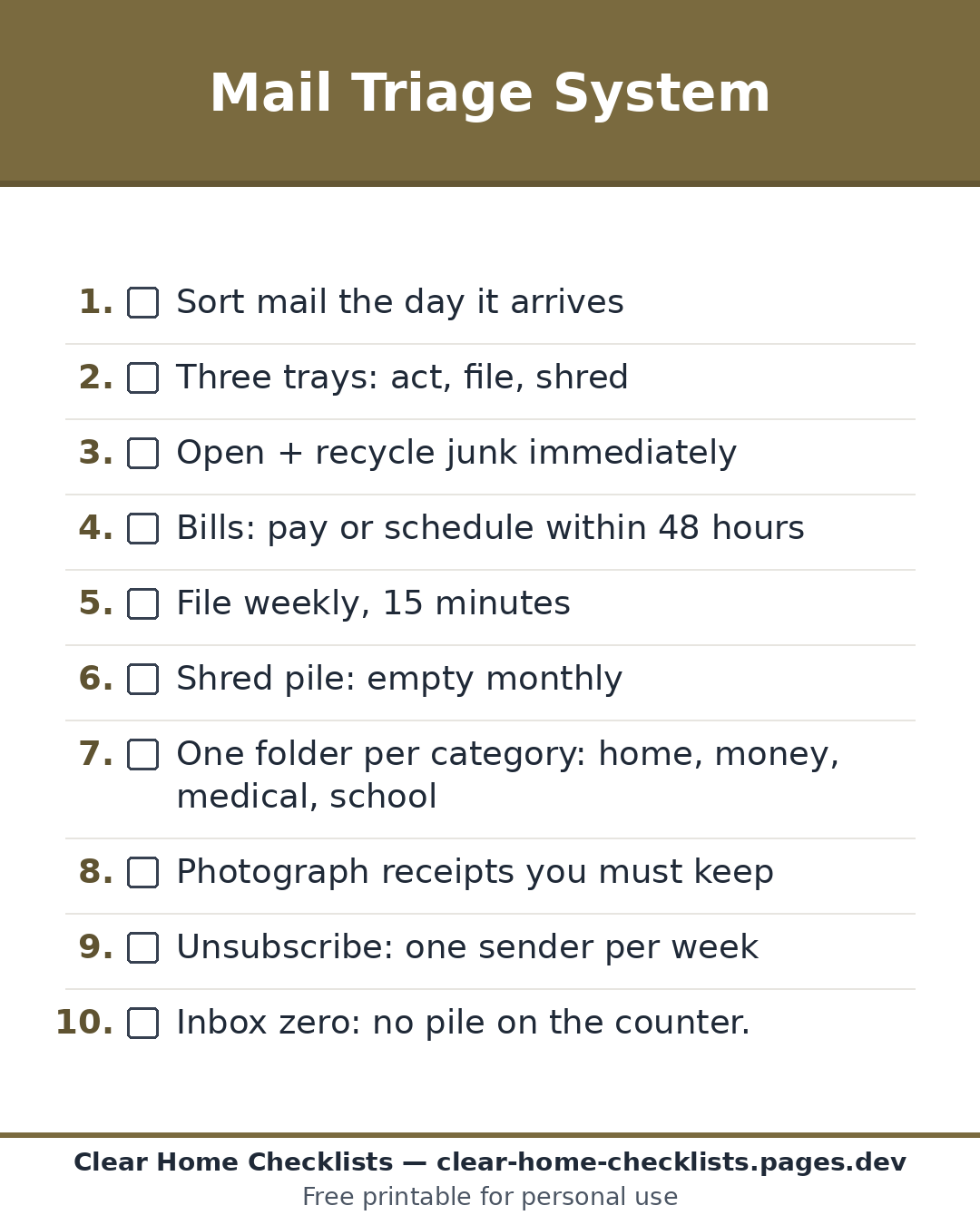
Follow this checklist in order to set up the system, then repeat the daily and weekly habits to keep it running. The printable version below has the same items for posting near your mail landing spot.
- Sort mail the day it arrives
- Three trays: act, file, shred
- Open + recycle junk immediately
- Bills: pay or schedule within 48 hours
- File weekly, 15 minutes
- Shred pile: empty monthly
- One folder per category: home, money, medical, school
- Photograph receipts you must keep
- Unsubscribe: one sender per week
- Inbox zero: no pile on the counter
Keep the counter clear
The measure of this system is visible: no pile on the counter. Mail arrives, gets sorted the same day, and lands in a tray, a folder, or recycling. If a pile forms, one habit slipped, so restart it this week and clear the pile in one session.
Frequently asked questions
How much time does mail triage take?
Two minutes daily to sort, plus fifteen minutes weekly to file and a monthly shred-pile emptying.
How many folders do I need?
Four at most: home, money, medical, and school. Skip any category that does not apply to your household.
Should I keep paper receipts?
Photograph receipts you must keep and store the photos in one folder. Keep the paper original only if return or warranty terms require it.