The 30-Day Declutter Challenge for a Small Apartment (Free Tracker)
A whole-home declutter feels overwhelming in a small apartment, because there is nowhere to spread everything out and no spare room to hide the mess while you decide. This 30 day declutter challenge for a small apartment takes the opposite approach: one tiny zone per day, fifteen to twenty minutes at a time, for thirty days. You never empty a whole room. You open one drawer, clear one shelf, or sort one small pile, and then you stop. By the end of the month, you will have touched the kitchen, bedroom, bathroom, living areas, and paper piles, one micro-area at a time, without turning your home upside down.
In short
- One tiny zone per day, fifteen to twenty minutes, for thirty days.
- Work in weekly themes: kitchen, bedroom, bathroom, living areas, then a final sweep.
- Keep a donate box open all month and take it out on day thirty.
- Use four decisions only: keep, donate, recycle, or trash.
- Missed a day? Do that zone tomorrow and keep going. Do not double up.
How the challenge works
Each day has one micro-area, small enough to finish in twenty minutes: one drawer, one shelf, or one small pile. Take the items out, wipe the surface, sort each item into keep, donate, recycle, or trash, and put back only what you keep. When the timer ends, stop. Stopping on time is what lets you return tomorrow.
Keep three containers ready from day one: a donate box, a recycling bag, and a trash bag. The donate box stays open all month and nothing comes back out. On day thirty it leaves the apartment. A donate box that stays for months is storage with good intentions, not decluttering.
Four decisions, no maybe pile
Every item gets one decision: keep, donate, recycle, or trash. There is no maybe pile and no move-it-to-another-room option. If an item belongs elsewhere, walk it there now. If it has no home anywhere, it leaves the zone. Moving clutter between rooms is how small apartments stay cluttered while feeling busy.
When you hesitate, ask whether you used the item in the past year and whether you have a specific plan to use it next month. If both answers are no, it leaves. Set sentimental items aside in one small keepsake box and keep working; keepsakes deserve their own time after the challenge.
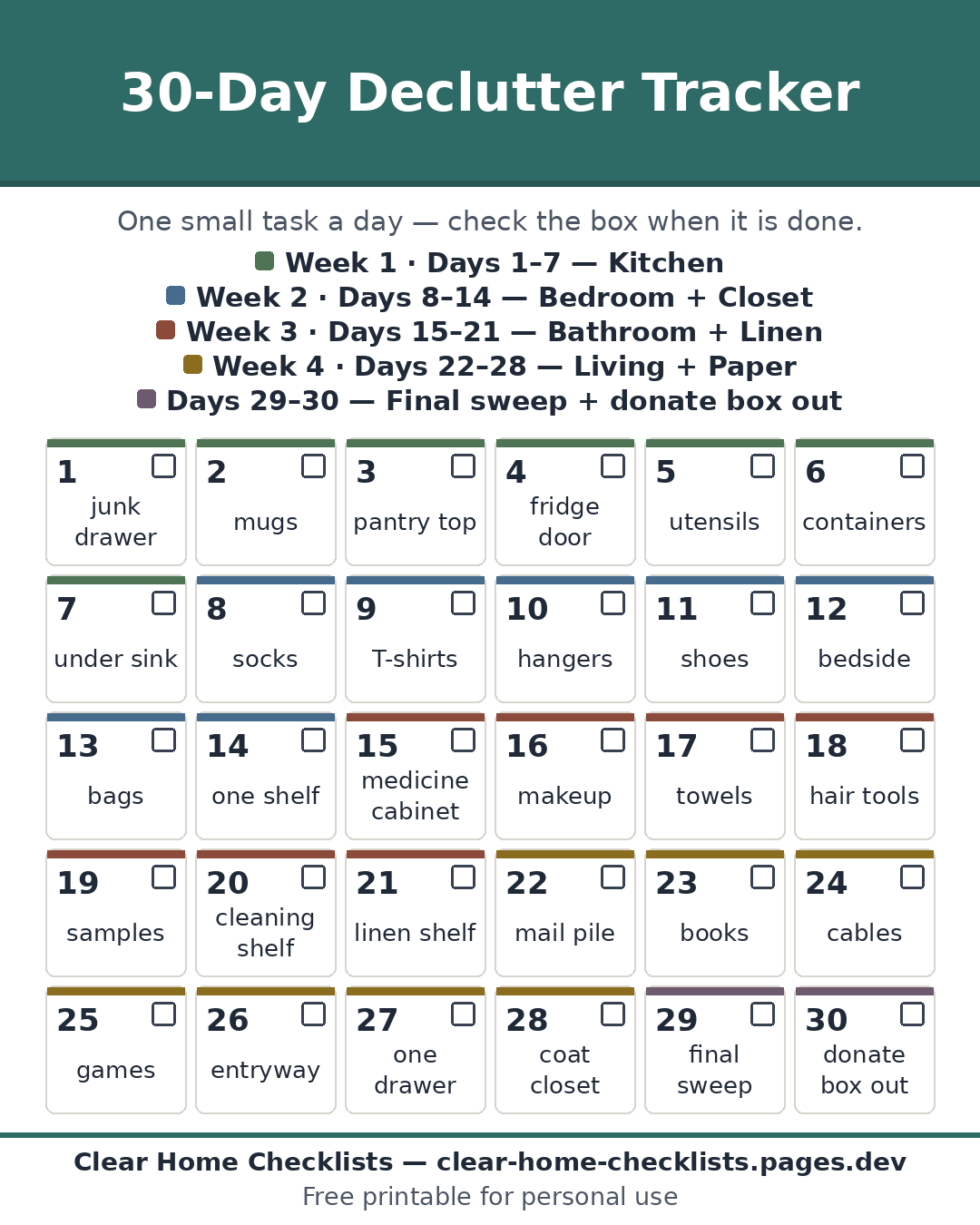
Week 1: kitchen micro-areas
Week one stays in the kitchen, one small zone at a time. Work after dinner or before breakfast, when the kitchen is already in use and the timer feels like part of the routine rather than an extra task.
- Day 1: Junk drawer. Empty it, discard broken items and dead batteries, and keep only tools you use.
- Day 2: Mugs. Keep the mugs you use weekly, donate the extras, and leave one shelf with breathing room.
- Day 3: Pantry top shelf. Check dates, discard expired items, and move daily foods to eye level.
- Day 4: Fridge door. Remove old sauces and condiments, wipe the shelves, and keep what you use.
- Day 5: Utensils. Keep the tools you reach for weekly and donate duplicates and single-use gadgets you never use.
- Day 6: Food containers. Match lids to bases, recycle or discard orphans, and stack the keepers neatly.
- Day 7: Under sink. Pull everything out, keep one bin for cleaning supplies, and discard empty bottles.
Week 2: bedroom and closet micro-areas
Week two moves to the bedroom and closet. Work with the closet door open and a full-length view of what you own. Try nothing on during these sessions unless an item's fit is the only question. Fit checks belong in a separate session, or week two will take all month.
- Day 8: Socks. Pair them, discard singles without partners and worn pairs, and fold the rest in one drawer section.
- Day 9: T-shirts. Keep the shirts you wear, donate the rest, and fold the keepers in one neat stack.
- Day 10: Spare hangers. Remove empty hangers, keep a small spare set, and recycle or donate the extras.
- Day 11: Shoes. Keep the pairs you wear, donate usable extras, and return the keepers to one spot.
- Day 12: Bedside table. Clear the surface and drawer, keep nightly essentials, and move everything else to its home.
- Day 13: Bags. Keep the bags you use, donate the rest, and store the keepers in one place.
- Day 14: One shelf. Choose one closet shelf, empty it, and put back only what belongs there.
Week 3: bathroom and linen micro-areas
Week three covers the bathroom and linen storage. Check label dates as you sort, and follow local rules for disposing of any product with special instructions. Keep only what you use, and move backups to one defined storage spot.
- Day 15: Medicine cabinet. Check dates, remove empties, and keep daily items at the front.
- Day 16: Makeup bag. Empty it, discard dried-out or expired products, and keep what you use weekly.
- Day 17: Towels. Keep the towels you use, donate usable spares, and fold the keepers neatly.
- Day 18: Hair tools. Keep the tools you use, donate duplicates, and store cords tidily in one spot.
- Day 19: Free samples. Keep only samples you will use this week, and recycle or discard the rest.
- Day 20: Cleaning shelf. Group cleaning products in one bin, discard empties, and follow label directions.
- Day 21: Linen shelf. Re-fold one shelf of linens, return strays to their categories, and donate extras.
Week 4: living areas and paper
Week four clears the shared spaces and the paper that collects in them. These zones drift the fastest, so the goal is a visible reset: surfaces clear, one home for each category, and nothing left in a pile on a chair or table.
- Day 22: Mail pile. Sort it today: act, file, shred, or recycle, and leave no pile on the counter.
- Day 23: Books. Keep the books you will reread or reference, and donate the rest.
- Day 24: Cables. Test each cable, keep the ones that work and match a device you own, and recycle the rest.
- Day 25: Games. Keep the games you play, donate the rest, and check that pieces and parts are complete.
- Day 26: Entryway. Pair shoes, hang coats, clear the floor, and return stray items to their rooms.
- Day 27: One drawer. Choose one living-area drawer, empty it, and put back only what belongs there.
- Day 28: Coat closet. Remove off-season items to storage, keep daily coats, and clear the floor.
Days 29 and 30: finish well
- Day 29: Final sweep. Walk every room, return strays to their homes, and check that each zone from the month still looks right.
- Day 30: Donate box out the door. Take the donate box out of the apartment today, and empty the recycling bag as well.
Day twenty-nine is a review: walk each cleared zone, fix drift in a few minutes per zone, and note any zone that needs a smaller limit or clearer home. Day thirty closes the challenge: the donate box and recycling leave, and only decided items remain.
After the thirty days
After thirty days, keep a weekly twenty-minute reset, rotating through the month's zones, and keep a small donate bag emptied monthly. Every new item needs a home and a reason to stay. Thirty days of micro-areas make a small apartment calmer and easier to clean, because every zone was touched and every item was decided.
Frequently asked questions
How much time does each day take?
Fifteen to twenty minutes. Set a timer and stop when it ends, even if you feel motivated to continue.
What if I miss a day?
Do that zone the next day and keep going. Do not double up or restart the challenge.
What do I do with the donate box?
Keep it open all month, decide once per item, and take it out of the apartment on day thirty.